Key Takeaways
- Christianity and science can coexist, offering a richer understanding of the universe.
- Many significant scientific advancements have been motivated by faith and religious curiosity.
- Viewing scientific discoveries through a lens of faith can inspire awe and deepen one’s spiritual journey.
Exploring the universe through the lens of faith invites a thoughtful dialogue between scientific discovery and spiritual understanding. For many Christians, the natural world is not separate from belief but deeply connected to it, reflecting order, purpose, and meaning. Scientific advancements, from astronomy to biology, offer insights into how the universe functions, while faith traditions provide a framework for interpreting why it exists. Rather than being in conflict, these perspectives can coexist, encouraging curiosity while grounding inquiry in a sense of divine intention.
Within this conversation, resources such as a Christian creation science book can serve as one way to examine how scriptural interpretations intersect with scientific ideas about origins and development. While views differ among scholars and believers, engaging both faith and science can foster a more nuanced appreciation of the cosmos, allowing individuals to explore profound questions with openness, humility, and intellectual balance.
The Harmony Between Faith and Science
Christianity asserts that human reason and the world around us are gifts from God. The Bible calls believers to seek understanding and wisdom, motivating many to see scientific discovery as fundamentally compatible with faith. According to a special issue in the academic journal Religions, a Christian worldview can embrace the foundational scientific question, “Why is there something rather than nothing?” by recognizing God as the ultimate source of existence. This theological grounding strengthens the argument that a faithful approach to science is not only possible but fundamental to Christian identity.
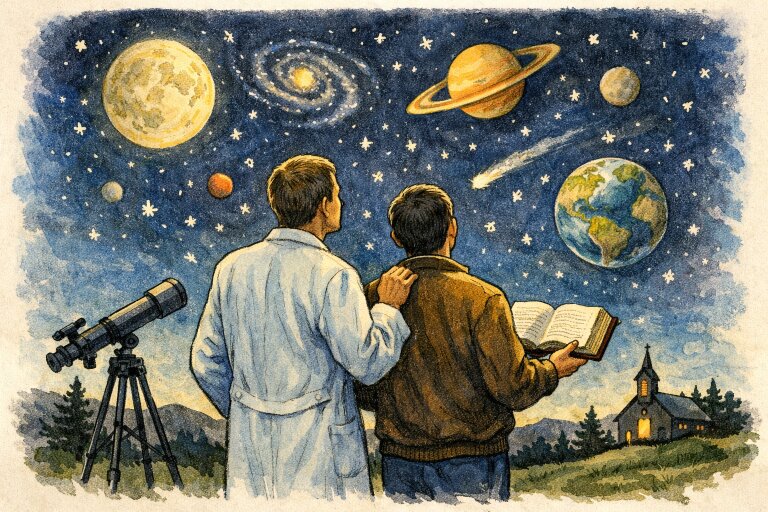
Historical Perspectives: Faith-Inspired Scientific Inquiry
Many trailblazers in science viewed their groundbreaking work as an extension of their devotion. Johannes Kepler envisioned his astronomical calculations as a way to reveal the ordering principle established by God in the universe. Robert Boyle, revered as the father of modern chemistry, considered his experiments acts of worship that unveiled the wonders of creation. For centuries, Christian theologians and scientists alike have contended that the study of natural laws points to an intelligent, purposeful Creator.
Notably, Sir Isaac Newton credited his scientific achievements to his religious beliefs, and his works frequently referenced scripture. These examples illustrate that scientific rigor and Christian commitment have often complemented and fortified one another, rather than standing in conflict.
Modern Science Through a Christian Lens
Today, many Christian communities and thinkers continue to reflect deeply on the intersection of science and faith. Understanding the intricacies of biology, astronomy, and physics can help believers experience a renewed sense of awe for the Creator’s work. This framework does not require the rejection of established scientific findings; instead, it welcomes them as integral to the Christian faith journey.
The growing collaboration among scientists who believe in God has led to new educational resources, conferences, and organizations aimed at harmonizing biblical faith with evidence-based science.
Addressing Perceived Conflicts
Certain scientific developments, such as theories about the origins of life or the universe, have led to questions about how these findings align with scripture. Many Christians approach these topics by interpreting the Bible with both theological depth and openness to new knowledge. For example, the concept of the Big Bang, suggesting the universe had a definitive beginning, can echo the biblical premise of creation ex nihilo (creation out of nothing). By using a theological framework to interpret scientific developments, believers can reconcile their convictions with emerging data.
The Role of Christian Scientists
Christian scientists continue to serve as bridges between the faith and scientific communities. Organizations such as BioLogos, founded by renowned geneticist Francis Collins, promote a view that celebrates scientific progress alongside spiritual devotion. These individuals and groups foster respect for both scripture and empirical evidence, equipping others to pursue truth in both spheres.
Their work not only encourages healthy dialogue but also challenges the misconception that religious faith is inherently anti-scientific. Instead, it reveals a long-standing tradition of scientific excellence informed by deep faith.
Encouraging Scientific Literacy Among Christians
Encouraging the study of science within Christian communities fosters curiosity, wonder, and a greater appreciation for the natural world. Educational programs, church-based seminars, and faith-based curricula encourage believers to pursue scientific literacy as part of their spiritual growth. These efforts help cultivate a generation of Christians ready to explore the unknown, guided by faith and informed by scientifically sound reasoning.
Conclusion
When Christians view the cosmos through the eyes of faith, scientific discovery becomes a meaningful part of their spiritual experience. Embracing both faith and science allows believers to appreciate the universe’s complexity and beauty, deepening their understanding of creation and strengthening their relationship with God.