A backyard pool often serves as a place to unwind, cool off, and gather with family and friends. While most pool owners focus on keeping the water clear and inviting, there is another important factor that deserves attention: the air surrounding the pool. Water chemistry and maintenance practices can directly influence air quality, which affects comfort and respiratory health for everyone nearby.
When pool chemicals are not properly managed, they can release irritants into the air. These airborne byproducts may go unnoticed at first, but over time they can create discomfort for swimmers and those relaxing poolside. Understanding how pool care connects to air quality helps homeowners create a safer, more enjoyable environment.
How Air Quality Issues Develop Around Pools
Pool safety discussions often focus on visible concerns such as slips, falls, or water depth. However, chemical reactions occurring in the water can also affect the air, especially in indoor pools or outdoor areas with limited airflow.
Several factors commonly contribute to poor air quality:
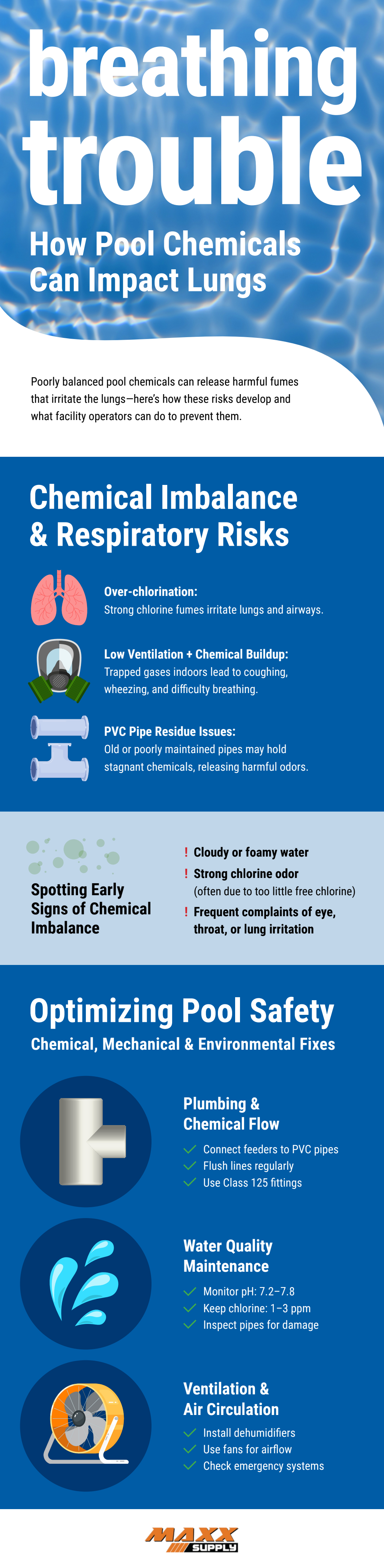
Excess chlorine
Chlorine is essential for sanitation, but too much of it can produce strong fumes. These vapors may irritate the lungs and cause coughing, wheezing, or chest tightness. Children, individuals with asthma, and those sensitive to chemical smells are often the most affected.
Inadequate airflow
Even properly balanced pools can develop air quality issues if ventilation is lacking. Disinfectant byproducts can become trapped in enclosed or partially covered spaces, allowing irritants to linger longer than they should.
Chemical residue in plumbing
Over time, plumbing systems can retain chemical buildup. Older PVC piping in particular may hold residue that releases odors or irritants when water temperature or flow changes. Choosing chemical compatible fittings and maintaining clean circulation lines helps reduce this risk.
Warning Signs to Watch For
Your senses often provide early clues that something may be off. Cloudy or foamy water can signal chemical imbalance. A strong chlorine smell usually points to chloramines rather than clean, effective chlorine. Complaints of burning eyes, sore throats, or persistent coughing from swimmers are also signs that air quality may be compromised.
Ways to Improve Air Quality Around Your Pool
Maintaining a healthy pool environment involves more than testing the water. A comprehensive approach supports both water and air quality.
Improve plumbing and chemical circulation
Regularly flush plumbing lines to prevent chemical buildup. Use chemical resistant fittings such as Class 125 components. Make sure chemical feeders distribute treatments evenly through the circulation system.
Keep water chemistry in balance
Maintain pH levels between 7.2 and 7.8. Keep chlorine between 1 and 3 ppm. Inspect plumbing and equipment before peak swimming season to address issues early.
Enhance airflow and ventilation
Use dehumidifiers in indoor or enclosed pool areas. Encourage natural air movement with fans or open designs. Check that ventilation and exhaust systems are functioning properly and consistently.
Healthy Pools Depend on Clean Air Too
A pool should add comfort and enjoyment to your home, not create hidden health concerns. While clear water is important, the air around the pool plays an equally important role in overall comfort and safety. With regular maintenance, balanced chemistry, and proper airflow, you can protect both swimmers and guests.
By considering what is happening in the air as well as in the water, you help ensure your pool remains a refreshing and welcoming space for everyone who uses it.
For more on this, check out the infographic below from Maxx Supply, a supplier of PVC gate valves.